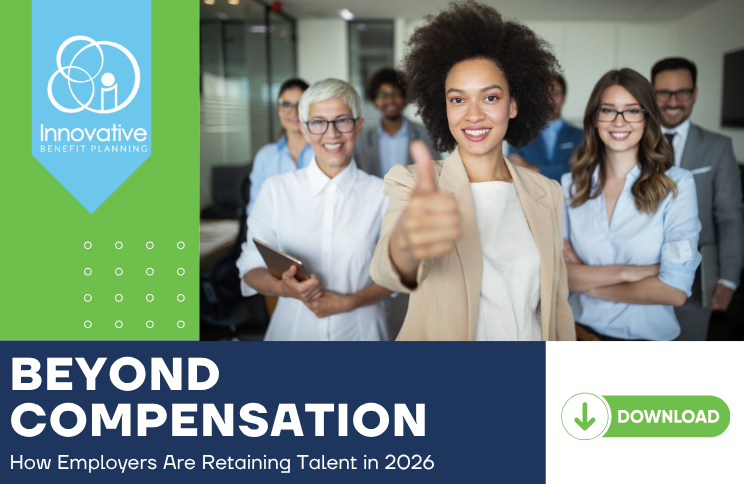
Beyond Compensation: How Employers Are Retaining Talent in 2026
Employee retention has become one of the most pressing challenges for organizations today, and one of the most misunderstood.
For years, employers have relied on compensation as the primary lever to attract and retain talent. But in today’s workforce, that approach is no longer enough.
Employees aren’t just asking, “What do I get paid?”
They’re asking:
Do I feel supported?
Do I understand my benefits?
Does my employer actually care about my wellbeing?
The organizations that are winning the retention game in 2026 aren’t necessarily the ones spending the most, they’re the ones being the most intentional.
Here are the five strategies we’re seeing leading employers implement right now.
They’re Prioritizing Whole-Person Wellbeing
The definition of “benefits” has evolved.
Employers are recognizing that physical health is only one piece of the puzzle. Mental health, financial stress, and access to care all play a significant role in how employees show up—both at work and in life.
Forward-thinking organizations are:
- Integrating behavioral health and substance abuse support into their plans
- Offering Employee Assistance Programs (EAPs) that focus on early intervention
- Providing financial wellness tools and retirement education
- Expanding access to high-quality, in-network providers
Why it matters:
When employees feel supported as whole people—not just workers—they’re more engaged, more productive, and far more likely to stay.
They’re Making Benefits Easier to Use
Here’s a hard truth:
- Most employees don’t leave because they don’t have benefits—they leave because they don’t understand them.
- That confusion leads to frustration, poor utilization, and unnecessary stress.
- That’s why more employers are investing in employee advocacy models.
This looks like:
- A dedicated point of contact for employees (not a call center)
- Help with claims issues, billing questions, and finding care
- Real-time support through multiple channels—including text messaging
- Guidance that meets employees where they are
Why it matters:
Benefits only deliver value if employees can actually use them. Advocacy bridges that gap—and builds trust in the process.
They’re Moving Away from One-Size-Fits-All Plans
Today’s workforce is more diverse than ever, and their needs are not the same.
A single, rigid benefits package no longer works.
Employers who are retaining talent are:
- Designing plans based on workforce demographics and utilization patterns
- Offering voluntary benefits and targeted point solutions
- Exploring alternative funding strategies like self-funding, consortiums, and captives
- Giving employees more choice and flexibility in how they enroll
Why it matters:
When employees feel like their benefits are designed for them, not just offered to them, the perceived value increases dramatically.
They’re Communicating More—and Better
Benefits communication can’t start and end at open enrollment.
Employees want clarity. They want transparency. And they want to feel informed—not overwhelmed.
Leading employers are:
- Hosting ongoing education sessions throughout the year
- Simplifying complex benefit information
- Creating consistent, multi-channel communication strategies
- Equipping managers to confidently talk about benefits
Why it matters:
Clear communication reduces confusion, increases engagement, and reinforces trust in leadership.
They’re Letting Data Drive the Strategy
The most effective organizations aren’t guessing—they’re measuring.
Instead of reacting to renewals year after year, they’re building long-term strategies based on real data.
This includes:
- Benchmarking against industry peers
- Analyzing claims and identifying cost drivers
- Developing multi-year roadmaps
- Making proactive, informed decisions
Why it matters:
Data removes emotion from decision-making and replaces it with clarity—allowing employers to improve both cost and experience simultaneously.
So, What Does This Mean for Employers?
Retention isn’t about a single initiative.
It’s about creating an ecosystem where employees:
- Feel supported
- Understand their benefits
- Trust their employer
- See long-term value
Organizations that invest in these areas aren’t just retaining talent—they’re building cultures people don’t want to leave.
Where to Start
If you’re not sure how your current strategy stacks up, you’re not alone.
Most employers don’t have a clear view of:
- Where their dollars are actually going
- How their plan compares to the market
- What opportunities exist to improve both cost and experience
That’s exactly why we built our Benefit Performance Assessment.
In about an hour, we can help you:
- Identify inefficiencies
- Benchmark your plan
- Outline a 3-year strategy
- Uncover potential savings (often around ~17%)
If retention is on your radar this year (and it should be), it starts with understanding what’s working, and what’s not.
Let’s have a conversation.
marketing@ibpllc.com
Access Your Free Resource
Fill out the form below to receive an instant download link via email.